Showing posts with label books. Show all posts

Jul 22, 2012

Electronic I Ching Calculator

The second Dirk Gently book, "The Long Dark Tea-Time of the Soul", is arguably not as good as the first one - it's less poetic and less well structured, but it has more "cool stuff" in it, such as this:

 He had never before even guessed at the existence of such a thing. And to be able to move from total ignorance of something to total desire for it, and then actually to own the thing all within the space of about forty seconds was, for Dirk, something of an epiphany.

The electronic I Ching calculator was badly made. It had probably been manufactured in whichever of the South-East Asian countries was busy tooling up to do to South Korea what South Korea was busy doing to Japan. Glue technology had obviously not progressed in that country to the point where things could be successfully held together with it. Already the back had half fallen off and needed to be stuck back on with Sellotape.

It was much like an ordinary pocket calculator, except that the LCD screen was a little larger than usual, in order to accommodate the abridged judgements of King Wen on each of the sixty-four hexagrams, and also the commentaries of his son, the Duke of Chou, on each of the lines of each hexagram. These were unusual texts to see marching across the display of a pocket calculator, particularly as they had been translated from the Chinese via the Japanese and seemed to have enjoyed many adventures on the way.

The device also functioned as an ordinary calculator, but only to a limited degree. It could handle any calculation which returned an answer of anything up to "4".

"1+1" it could manage ("2"), and "1+2" ("3") and "2+2" ("4") or "tan 74" ("3.4874145"), but anything above "4" it represented merely as "A Suffusion of Yellow". Dirk was not certain if this was a programming error or an insight beyond his ability to fathom, but he was crazy about it anyway, enough to hand over 20 of ready cash for the thing.

"Thank you, sir," said the proprietor. "It's a nice piece that. I think you'll be happy with it.

* * *


The little book of instructions suggested that he should simply concentrate "soulfully" on the question which was "besieging" him, write it down, ponder on it, enjoy the silence, and then once he had achieved inner harmony and tranquillity he should push the red button.

There wasn't a red button, but there was a blue button marked "Red", and this Dirk took to be the one. He concentrated for a while on the question, then looked through his pockets for a piece of paper, but was unable to find one. In the end he wrote his question, "Should I buy a new fridge?" on a corner of his napkin. Then he took the view that if he was going to wait until he had achieved inner harmony and tranquillity he could be there all night, so he went ahead and pushed the blue button marked "Red" anyway. A symbol flashed up in a corner of the screen, a hexagram which looked like this:

3 : CHUN

The I Ching calculator then scrolled this text Across its tiny LCD display:

"THE JUDGEMENT OF KING WEN:
"Chun Signifies Difficulties At Outset, As Of Blade Of
Grass Pushing Up Against Stone. The Time Is Full Of
Irregularities And Obscurities: Superior Man Will Adjust
His Measures As In Sorting The Threads Of The Warp
And Woof. Firm Correctness Will Bring At Last Success.
Early Advances Should Only Be Made With Caution.
There Will Be Advantage In Appointing Feudal Princes.
"LINE 6 CHANGES:
"THE COMMENTARY OF THE DUKE OF CHOU:
"The Horses And The Chariot Obliged To Retreat.
Streams Of Bloody Tears Will Flow."


Dirk considered this for a few moments, and then decided that on balance it appeared to be a vote in favour of getting the new fridge, which, by a staggering coincidence, was the course of action which he himself favoured.


Feb 16, 2012

From the intro to "God Bless You Dr. Kevorkian" by Kurt Vonnegut


Some of you may know that I am neither Christian nor Jewish nor Buddhist, nor a conventionally religious person of any sort.

I am a humanist, which means, in part, that I have tried to behave decently without any expectation of rewards or punishments after I'm dead. My German-American ancestors, the earliest of whom settled in our Middle West about the time of our Civil War, called themselves "Freethinkers," which is the same sort of thing. My great grandfather Clemens Vonnegut wrote, for example, "If what Jesus said was good, what can it matter whether he was God or not?"

I myself have written, "If it weren't for the message of mercy and pity in Jesus' Sermon on the Mount, I wouldn't want to be a human being. I would just as soon be a rattlesnake."

I am honorary president of the American Humanist Association, having succeeded the late, great, spectacularly prolific writer and scientist, Dr. Isaac Asimov in that essentially functionless capacity. At an A.H.A. memorial service for my predecessor I said, "Isaac is up in Heaven now." That was the funniest thing I could have said to an audience of humanists. It rolled them in the aisles. Mirth! Several minutes had to pass before something resembling solemnity could be restored.

...

So when my own time comes to join the choir invisible or whatever, God forbid, I hope someone will say, "He's up in Heaven now." Who really knows? I could have dreamed all this.

My epitaph in any case? "Everything was beautiful. Nothing hurt." I will have gotten off so light, whatever the heck it is that was going on.

Dec 19, 2011

Riots - from Salman Rushdie's "Satanic Verses"

This is so beautiful, I had to share it. The book was published over twenty years ago, which isn't that much really, but long enough to make us think "look how the same rituals still exist".

Just a little background to the story, not even to help you understand what's happening, but because it's funny to us Mediterranean types: one of the book's characters, Gibreel, wandering around London and being homesick for India, wishes for warmer weather. Because there are supernatural forces at play, the weather does become unusually hot, and so the city erupts into the usual hot-weather activities: riots, police brutality, minority protests, false arrests and so on.

So, the attached pages describe the police seizure of the night club where the protesters keep their headquarters, as seen on the TV news:

Oct 2, 2011

The Three Musketeers 2011

People who didn't spend their primary school years carrying around Alexander Dumas' novel everywhere they went, can probably let this year's cinematic adaptation pass without comment. I am not such a person, and also I'm not a person who likes to let things pass without comment. And so, here we are.

From this point on, this post contains spoilers for both the book and the movie. The movie, of course, cannot be spoiled, and if you haven't read the book by now you have only yourselves to blame.


The creators of this film obviously found some of the book's elements too vulgar for their tender tastes. For example, all the nasty extramarital affairs, and unsightly female deaths. So they took them all out - the gentle queen Anne, of course, did not have an affair with Buckingham, and the sweet young Constance was not, of course, married. How could she be? She was waiting for the love of her life to ride in from the sticks on his orange horse. And of course she survives all the dangers on the way to have her kiss at the end of the movie. Even the wicked wicked Milady gets to live - and why shouldn't she? Her worst crime in the film was loving her career more than her moody boyfriend Athos. Surely spoiling her outfit with a little salt water is enough to sort her out. Also gone are the captain of the musketeers De Treville - one of my favorites characters, the musketeers themselves - apparently disbanded just before D'Artagnan shows up due to double-dip recession, and most of the plot, especially everything that happens after the diamonds adventure.

Strangely, after cleaning the storyline of these nasty nasty things, the writers found that they needed to add some vulgarities of their own - as big and vulgar as they could think of. So they turned the musketeers - the only three they had left (hey, the title only calls for three after all) into some kind of Mission Impossible secret scuba squad (I'm not kidding, they scuba!), added flame-throwing air ships (they make the annoying trip to and from London so much easier), turned the Duke of Buckingham into a total douchebag (that way the queen couldn't possibly like him), crash-landed into the roof of the Notre Dame, and, of course, had D'Artagnan kill Rochefort in a long and boring rooftop sword fight. At the end of the book, of course, D'Artagnan and Rochefort become friends, but that would've just confused today's tender-hearted viewer. Oh, and Rochefort had an eye missing. Scars are so subtle.

Having said all that, I need to insist that there were several excellent things in this movie, which made it almost worth watching:

All of the production design was breathtakingly beautiful, as was Milla Jovovich (what the hell is that woman made of?!). Most of the casting was spot-on, in ways that it hasn't been in previous adaptations. D'Artagnan was an adorable young goofball (the kid leading the horse), and so was the king - excellent! It was very smart to make them so much alike, in fact in all their scenes together they look like they're about to collapse into each-other's arms.

Usually the Cardinal and Athos (feather hat guy) are the sexiest men in the story, but this time Athos was totally flat, and Christoph Waltz as the Cardinal was good, but unexciting. This made room for two very sexy actors to take the parts of Porthos and Aramis (the big one and the one with the cross). I dare any hot-blooded  woman to watch this film and not fantasize about a threesome with those two!

The fact that they made Buckingham a strutting douchebag bugged me, but on the other hand Orlando Bloom as a strutting douchebag was great, and it's about time for him to lay off the elf stuff.

In conclusion ... oh hell, I don't have a conclusion. Long live the king, long live Paris, long live the Louvre, Notre Dame Cathedral and the Musee d'Orsay!

Jun 27, 2011

The most interesting thing I learned this year about sex and people.

I'm not sure how much "Game of Thrones" - the book or the TV series - has to teach us about life. Probably something about how winter is what happens while you're busy making other plans. Whatever.

The one thing I learned, not from the show but from looking up stuff about it on the internet, is that there's an unbelievable amount of people out there who think that if a sexual act is performed from behind, in necessarily means that it is anal sex. I wouldn't have believed it if someone told me about it, but the number of times I've read something like "...and how come they all only do it in the butt?!" is staggering. To me, all these people are repressed virgins and/or perverts.

I'm not sure why the citizens of Westeros choose to do it from the back 90% of the time - perhaps the rocks are cold and the ground dirty, or their seven gods don't approve of eye contact, or maybe that's the more practical way if you need to keep an eye out for dragons. Either way, if it was all anal, there wouldn't be so many bastards walking around, now would there?

The funniest comments are the ones accompanied by some deeply pseudo-intelligent analysis of the literary and/or cinematic qualities of the book/show.

May 25, 2011

A Song of Ice and Fire, or how to lose your fans in five extremely complicated steps.

Since A Game of Thrones began, I've been wondering how, being a known fantasy geek, and moving in geeky enough circles, I could've missed hearing about the Ice and Fire books, and how come I don't know anyone who's ever read them? Now that I've almost finished reading the currently published four books, and learned more about them, I understand why this is.

George R.R. Martin's "A Song of Ice and Fire" books are very long, very complicated, and very rich with characters. So rich that there's an iPhone app to help you keep track of who is who and what they've done. There are about fifteen main characters, through which the story is told. Meaning that each chapter is named after one of those characters, and is told through their point of view. The first three books, published respectively in 1996, 1998 and 2000, tell the story very well, switching from one POV character to the next, and moving forward in time through all of them. Then, apparently, Martin spent five years writing book 4, and announced in 2005 that it had become so long and complicated that he had decided to split it into two books. He published the first of them around the end of that year, and the next one is due this July. However, here's the little surprise: the book was split in two not chronologically, but per character. Meaning that both of them would cover the same time period, but each would feature only half the main characters.

So, to sum up; in 2000 Martin published book 3, which ended with rather nasty cliffhangers for most of the characters. Five years later he released book 4, which only continues half the story, and the other half is expected this July 2011.

Now, I became an eager Harry Potter fan in the worst possible moment, just after book 4 was published, so I know something about authors blueballing their readers, but even I have to say that this is beyond cruel. Much like the mad king from the Ice and Fire novels, who once placed a man in a situation where he had to watch his father burn or hang himself in the attempt to save him, George R.R. martin is abusing his power over his audience. And I know about the time it takes to create as well, and about artistic perfectionism, but it's too much. The thought that there are people out there who've been wondering about the faith of Tyrion Lannister, the only relatable character in the bunch, for over ten years, makes my blood run cold.

Where was I going with this? Oh, I remember. So, I now understand that the reason I hadn't met any Ice and Fire fans until now, was that they've all probably died, lost their minds, or are trying to forget the books ever existed. As well they should. Not cool Mr. Martin, not cool at all.

Feb 23, 2011

Czernobog / Bielebog

This is from Neil Gaiman's "American Gods" - a book I've developed a strong fetish for. The part where Shadow and Wednesday stay with the Russian gods is one of the best parts, where surrealism mixes with the reality of an old immigrant's household:

Czernobog shook his head. He looked up at Shadow. "Do you have a brother?"

"No," said Shadow. "Not that I know of."

"I have a brother. They say, you put us together, we are like one person, you know? When we are young, his hair, it is very blond, very light, his eyes are blue, and people say, he is the good one. And my hair it is very dark, darker than yours even, and people say I am the rogue, you know? I am the bad one. And now time passes, and my hair is gray. His hair, too, I think, is gray. And you look at us, you would not know who was light, who was dark."

"Were you close?" asked Shadow.

Jan 6, 2011

The Millemium Trilogy

This is what it feels like to read Stieg Larsson's Millenium Trilogy:

The first book is fascinating, though vulgar, and you fall completely in love with Lisbeth Salander. The second one is exciting, though far-fetched. By the middle of the third one, you just want all the characters to take their women's rights, their journalistic integrity, their hyperactive libidos and their overblown IQ and end it all in a nearby fjord.

I shudder to think what the other seven books would've been like.

Dec 15, 2010

OK, one more. This one is really cool:

"Which represents good and which represents evil --" he asked me, "the rifle or the rubbery, jiggling, giggling bag of bones we call the body?"
I said that the rifle was evil and the body was good.
"But don't you know that this rifle was designed to be used by Americans defending their homes and honor against wicked enemies?" he said.
So I said a lot depended on whose body and whose rifle we were talking about, that either one of them could be good or evil.
"And who renders the final decision on that?" he said.
"God?" I said.
"I mean here on Earth," he said.
"I don't know," I said.
"Painters -- and storytellers, including poets and playwrights and historians," he said. "They are the justices of the Supreme Court of Good and Evil, of which I am now a member, and to which you may belong someday!"
How was that for delusions of moral grandeur!
Yes, and now that I think about it: maybe the most admirable thing about the Abstract Expressionist painters, since so much senseless bloodshed had been caused by cockeyed history lessons, was their refusal to serve on such a court.

Dec 14, 2010

From Kurt Vonnegut's "Bluebeard"

At the very end, her brain-surgeon husband couldn't talk anymore, but he could still scrawl short messages with his left hand, although he was normally right handed. His left hand was all he had left that still worked a little bit.
According to Circe, this was his ultimate communiqué: "I was a radio repairman."
"Either his damaged brain believed that this was a literal truth," she said, "or he had come to the conclusion that all the brains he had operated on were basically just receivers of signals from someplace else. Do you get the concept?"
"I think I do," I said.
"Just because music comes from a little box we call a radio," she said, and here she came over and rapped me on my pate with her knuckles as though it were a radio, "that doesn't mean there's a symphony orchestra inside."
"What's that got to do with Father and Terry Kitchen?" I said.
"Maybe, when they suddenly started doing something they'd never done before, and their personalities changed, too --" she said, "maybe they had started picking up signals from another station, which had very different ideas about what they should say and do."

* * *

I have since tried out this human-beings-as-nothing-but-radio-receivers theory on Paul Slazinger, and he toyed with it some. "So Green River Cemetery is full of busted radios," he mused, "and the transmitters they were tuned to still go on and on."
"That's the theory," I said.
He said that all he'd been able to receive in his own head for the past twenty years was static and what sounded like weather reports in some foreign language he'd never heard before. He said, too, that toward the end of his marriage to Barbira Mencken, the actress, she acted "as though she was wearing headphones and listening to the 1812 Overture in stereo. That's when she was becoming a real actress, and not just another pretty girl onstage that everybody liked a lot. She wasn't even 'Barbara' anymore. All of a sudden she was 'Bar-beer-ah!' "
He said that the first he heard of the name change was during the divorce proceedings, when her lawyer referred to her as "Barbira," and spelled it for the court stenographer.
Out in the courthouse corridor afterwards, Slazinger asked her: "Whatever happened to Barbara?"
She said Barbara was dead!
So Slazinger said to her: "Then what on Earth did we waste all this money on lawyers for?"
¬
* * *

I said that I had seen the same sort of thing happen to Terry Kitchen the first time he played with a spray rig, shooting bursts of red automobile paint at an old piece of beaverboard he'd leaned against the potato barn. All of a sudden, he, too, was like somebody listening through headphones to a perfectly wonderful radio station I couldn't hear.
Red was the only color he had to play with. We'd gotten two cans of the red paint along with the spray rig, which we'd bought from an automobile repair shop in Montauk a couple of hours before. "Just look at it! Just look at it!" he'd say, after every burst.
"He'd just about given up on being a painter, and was going into law practice with his father before we got that spray rig," I said.
"Barbira was just about to give up being an actress and have a baby instead," said Slazinger. "And then she got the part of Tennessee Williams's sister in The Glass Menagerie."

* * *

Actually, now that I think back: Terry Kitchen went through a radical personality change the moment he saw the spray rig for sale, and not when he fired those first bursts of red at the beaverboard. I happened to spot the rig, and said that it was probably war surplus, since it was identical with rigs I had used in the Army for camouflage.
"Buy it for me," he said.
"What for?" I said.
"Buy it for me," he said again. He had to have it, and he wouldn't even have known what it was if I hadn't told him.
He never had any money, although he was from a very rich old family, and the only money I had was supposed to go for a crib and a youth bed for the house I'd bought in Springs. I was in the process of moving my family, much against their will, from the city to the country.
"Buy it for me," he said again.
And I said, "O.K., take it easy. O.K., O.K."


This is a very Vonneguty month for me :)

Dec 10, 2010

"Galapagos" read by Jonathan Davis

I'm listening to the "Galapagos" audiobook, read by someone named Jonathan Davis, who uses such a heart-breakingly melancholy voice that he makes me want to curl up under the covers in a fetal position and wail like a wounded baby seal. Very appropriate for the subject matter.

Sep 4, 2010

The Chronicles of Narnia, The Problem of Susan

I read "The Lion, the Witch and the Wardrobe" when I was young, and of course was completely oblivious to the whole Christian agenda in it. This month I finally made time to read the entire series, and I'm very happy that I waited until I was equipped to understand everything they try to teach. It would've been so depressing to have read and loved all the seven books as a little girl, and then at the age of 33 to re-read them and discover all that religious crap in there.

A couple of the books are pretty good, though none of them managed to really move me. Their most exhausting feature is the fact that all the characters are a bunch of religious nags.
Their best quality is that, despite the Christian agenda, they don't suffer from slave morality. It's a Christianity evolved from the Greek traditions, not the Judaic ones. They don't turn the other cheek, they are proud without being vain, they know that they're entitled to certain things and they don't hesitate to fight for them. Oh, and they don't take any crap from Muslims.
The other thing I love is that Aslan is the way we all wish God would be. He is present. He shows up when you call out to him. He is scary, but you can nuzzle his fur, you can bury your face in his mane, and know that he will give you lion kisses and tell you what to do. He might punish you, but always in a way that allows you to keep your dignity, and he'll always tell you his reasons for it. He doesn't leave a cryptic book to try to interpret his will, he comes to you in a flash of light and tells you what to do. How nice of him.

Book seven, "The Last Battle", is to me the worst one. It starts fine with the struggles against the false Aslan, but then the whole storyline of the second coming and the voyage to heaven feels so forced and unnecessary, not to mention morbid. And then of course there's the evil trick C.S. Lewis decided to play on the character of Susan. Evil and mean and pathetic. Luckily, Neil Gaiman has written and answer to this book in his short story "The Problem of Susan", which I enjoyed reading immediately after "The Last Battle". One day I'll meet Mr. Gaiman at some book signing or something and thank him for "American Gods" and "The Problem of Susan".

Jun 29, 2010

Dinosaurs, in the biblical sense.

I just heard someone on the radio talking about how religious people don't like you to mention dinosaurs around them, because everything that contradicts the Bible offends them. Well alright, but I'd just like to make a note of something fairly basic - dinosaurs do appear in the Bible. In fact they appear on the first page of the Bible. (pause for effect)

I can understand why English speaking people don't know about this, because in most translations it appears as "whales" or "great sea monsters". I had to look in something called "Young's Literal Translation" to find a text close enough to the original. As you can see, it says "the great monsters". The Hebrew text (which has also been interpreted as meaning "whales" in the middle ages) says simply "the great alligators". Well, anyone who has the ability to make the connection between "let there be light" and the big bang, can make the connection between "the great alligators" and dinosaurs. Anyone who doesn't have that ability - I have nothing for ya.

And, of course, it's one of those issues that don't really matter either way.


Resources: http://bibleresources.bible.com/bible_read.php
and http://www.mechon-mamre.org/i/t/t0101.htm

In addition, and without detracting from my point, it now occurs to me that the modern Hebrew word for "alligators" (taninim) was probably adopted from this text, and it probably did mean "monsters" back then. Still. Dinosaurs.

May 29, 2010

Ode to the e-book reader

Usually when I talk about how happy I am with my Cybook, people don't understand the point of such a boring gadget - there's no colors, no games, no touch screen (some of them do have it), it costs hundreds of dollars, why can't you read on a laptop, and what's wrong with a good old-fashioned paper book anyway? Well, I'm about to explain exactly why e-book readers are so great, and why I'm so in love with mine.

Space: Remember when mp3-s replaced CDs? Remember how heavy those book boxes were the last time you moved? Now I have this thing that's 19 x 12 x 0.8 centimeters and weighs 170 grams, and a folder in my computer with a bunch of text files. No, I haven't had the heart to get rid of all my paper books yet, and of course there are the comic books, but there are no new books coming into the house, and there's always the memory of the CD shelves that are gone forever.

Comfort: This is going to sound petty, but you'll have to take my word for it - the fact that I can hold the e-book with just three fingers and turn the page without moving, that I can be under the covers in bed, hold the book through the cover and not have to take my arm out to turn the pages, the fact that I don't have to keep propping something to keep the book open, all make an incredibly big difference. Add to that the fact that e-paper doesn't flare in direct sunlight, which means that I can sit in a park or in a bus without going blind.

Adjustable text size: I work about ten hours a day on a computer. After that, even with glasses, my eyes can't focus on normal book text sizes. Between that and some attention deficit symptoms that I suffer from, there was a time when I depended mostly on audio books. The fact that now I can pick a large text size not only allows me to see it better, but it gives the illusion that the reading is going very fast, as the pages become much shorter than usual. Without the e-book I would probably have carried Anna Karenina and Moby Dick around my neck like huge millstones of shame right into the grave. Now I can happily talk about how crap they are.

Availability: I live in the third world. I speak four languages, and I like to read what I can in its original form. Most of the things I want to read are very hard to find here in stores, and many times you have to settle for the translated version. On the other hand, I can find almost everything I want in online stores and download it immediately.

So, why not a laptop, iPhone or the coveted iPad? All of them are heavier than the e-books, and I personally can't stand to read from a computer screen. Also, I don't mind admitting that if I had a choice between computer games and reading, reading would lose every time. So the low-tech is actually an advantage.
As for the people who need the feel, taste and smell of paper, to me they're like the people who miss the scratchy sound of records - their argument is completely irrational to me, and I don't know how to argue with irrational convictions.

Now I read that they have come up with the first Hebrew e-book reader. It's not the first reader that works with Hebrew, but it is the first one that has its own online store. And it's very beautiful (though I might've seen that design before), and it's a great idea. I hope it works well even though it's a prototype, and I hope that people realize how useful it can be.

Apr 17, 2010

Anna Karenina revisited

I feel the need to clarify - when I said about Madame Karenina "may she never darken my doorstep again" - well I did mean it, but I wouldn't say that the book didn't have any enjoyable parts. I feel like making a list of the things I loved. If you've read the book you might enjoy the reminders, if you plan to read it, the next section is spoilers, and if you're the other 90% of humanity you can just spare yourself this post. Here we go:

The whole beginning where Levin loses Kitty to Vronsky and Kitty loses Vronsky to Anna is funny and moving and an interesting insight into the way people used to interact in those years.

Karenin the husband is a great character throughout the book.

I love the way the book deals with how everyone else's affairs except Anna and Vronsky's are light-hearted little games that revive the spirit and often serve to promote the social status of the couple.

Levin's struggles with metaphysics, if they weren't so draaawwwwn ouuuuut would've been very enjoyable. For sure the part where he joins the peasants in cutting the grass, even as it is six or seven chapters long, managed to move me deeply. After that, the chalk proposal is one of my favorite love scenes ever.

The part where Lavin's brother is dying and Kitty takes care of him is maybe my favorite part, but Tolstoy manages again to drag it out for much longer than necessary.

The character of Varenka, in her influence on Kitty in the times when Kitty thinks she might remain an old maid, and later on when there's a pathetic attempt to get her engaged to Sergey Ivanovitch, is for me one of the most thought-provoking and memorable parts of the book.

There's the episode where Dolly is jealous of Anna's life, and disgusted with her own state of constant pregnancy and humiliation, including a peasant girl she meets that tells her ‘I had a girl baby, but God set me free; I buried her last Lent’ - in her misery, Dolly even manages to be jealous of that girl for a while.

Another thing I loved was the horrible succubus woman that latches herself to Karenin, culminating in the great seance scene they force on Stiva.
 --
About the movie: it was pretty weak, but well cast - Sean Bean as Vronsky (naked, yummy!) and Sophie Marceau as Anna, Alfred Molina as Levin (weird) and the always pleasantly annoying Mia Kirshner as Kitty. The actor who played Karenin, James Fox, was as good as Karenin is in the book.

Apr 12, 2010

Anna Karenina

After six years, I have finally managed to get rid of that horrible woman. May she never darken my doorstep again.

Observation: I am not particularly moved by tales of all-consuming, inherently destructive love. Nor am I partial to lengthy lectures on late 19-th century agricultural ethics.


P.S. Now I can finally watch the movie :D

Apr 9, 2010

A brother from another father

As I was finishing "Midnight's Children", I read somewhere that it's based on "The Tin Drum", so I quickly got hold of "The Tin Drum" and moved straight from one to the other. Conclusions so far: one - if you can help it, it's good to take a little breather between two lengthy books that are based on each-other. Two - George Guidall is beginning to fill the vacant role of a beloved uncle in my life. Three - while Saleem Sinai was an adorable and sensitive child that I would gladly adopt, little Oscar would have drummed all the way to an orphanage at the first broken light bulb if I had been his mother.

I take a minute to amuse myself with photos of the two authors and read on...

Mar 19, 2010

Ganesh

Saleem Sinai, the protagonist of Salman Rushdie's "Midnight's Children", tied by the time of his birth and the shape of his head to his motherland, is snotty and miserable. I, allergic to my homeland and suffering from a cold after an unexpected meeting with my birth-land, am snotty and miserable. I make a cocktail from my allergy meds and my cold meds and read on...

Mar 5, 2010

An ethical dilemma

I never know, when recommending something - a book for example, if I should warn people that the ending is disappointing. If I warn them, the anticipation might spoil the good parts for them, or they might decide not to bother - I'm not the most convincing person in the world anyway. But, if I don't warn them, they kinda look at me in the end like I've betrayed them.

The two main works that give me this problem are Battlestar Galactica, and the Roger Zelazny's Amber books. Both amazing works of art that noone should try to do without, and both spit in your eye at the end.

Feb 13, 2010

Main lesson learned from "Moby Dick":

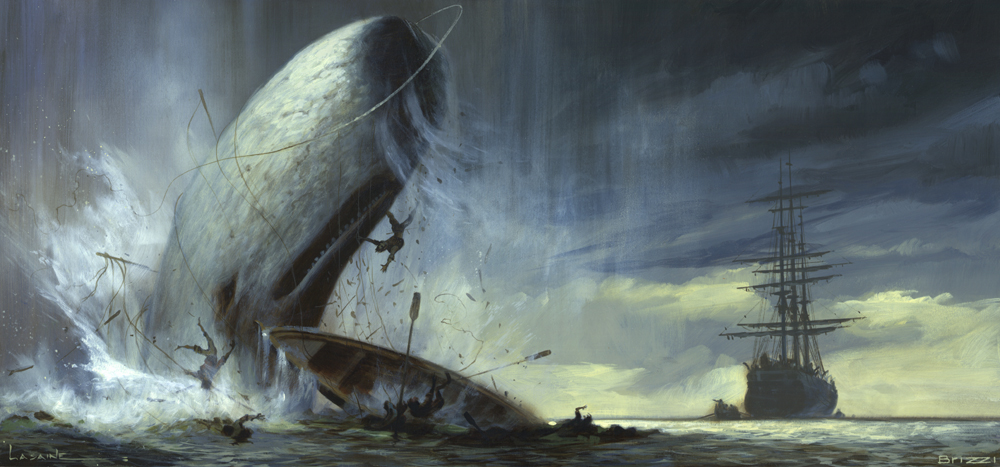
If you're really determined, it's possible to present a single profession as a metaphor for everything in the world - especially if it's one of those barbaric, destructive professions that men need to go away into the wild to engage in - but you'll just end up sounding pretentious and annoying. But hey, maybe that's what Melville was trying to show.